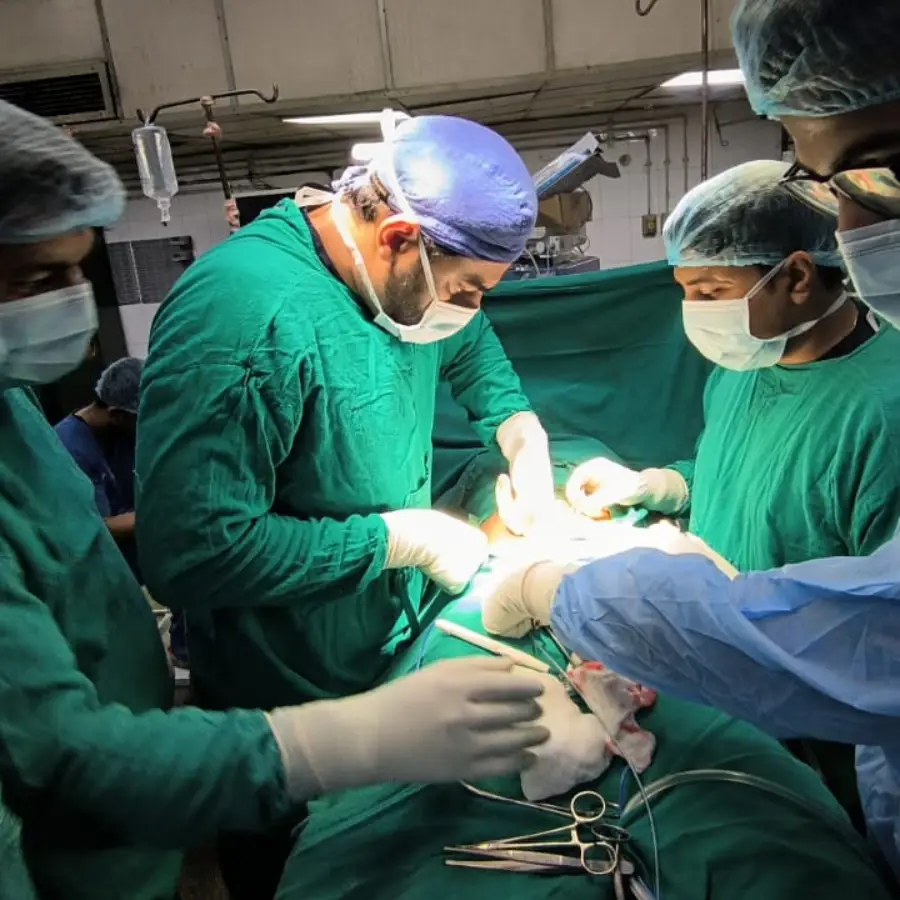

Breast, Thyroid & General Surgeries
Thyroid Surgery (Thyroidectomy)

What is Thyroidectomy?
Thyroidectomy is the surgical removal of all or part of the thyroid gland, done to treat goitre, thyroid nodules, hyperthyroidism, or thyroid cancer.

When is It Done?
Thyroidectomy is recommended when:
- Enlarged thyroid causing swallowing or breathing issues (goitre)
- Suspicious or cancerous thyroid nodules
- Diagnosed thyroid cancer
- Overactive thyroid (hyperthyroidism) not controlled by medicines
- Cosmetic reasons (bulky neck swelling)
Types of Thyroid Surgery
There are three types of Thyroid Surgery
- Total Thyroidectomy – entire gland removed
- Hemithyroidectomy – one lobe removed
- Completion Thyroidectomy – remaining gland removed later if needed
What the Procedure Involves
- Done under general anesthesia
- A small cut is made at the base of the neck
- Precise removal with care to preserve nerves and parathyroid glands
- Hospital stay: 1–2 days
- Regular follow-ups and thyroid function monitoring

Benefits of Surgery
✅
Removes disease from the root
Prevents future complications
Provides clarity if the biopsy is inconclusive
Cosmetic relief in visible neck swelling
Why Choose Dr. Davinder Singh
Choosing the right surgeon isn’t just about qualifications — it’s about trust, consistency, and the confidence that you’ll be cared for with skill and honesty. Dr. Davinder Singh brings all of that together with over a decade of hands-on experience and a background that speaks for itself.
01.
Experience
Accurate diagnosis & imaging before surgery and Expert in nerve-sparing thyroid techniques
02.
Listning
Patient-first approach with detailed pre and post-op guidance
03.
Faith
Trusted by patients across Punjab and neighbouring states
What My Clients Say
Let real testimonials do the speaking!
Frequently Asked Questions
Yes, if the full gland is removed. Partial removal may not need it.
Yes. With an experienced surgeon, it’s a low-risk and life-improving procedure.
Yes, but it’s small, neat, and fades over time.
Rarely. Temporary hoarseness may occur, but permanent change is very uncommon with expert care.